Monday, July 19, 2021

Barsoomian & _John Carter_

After my last post on Disney's Conlangs, I was reminded that there is another Disney movie (not a cartoon, but still a Disney movie) that features a conlang: John Carter (of Mars) (as usual, this and other Amazon links are affiliate links, so I get a cut if you buy the stuff).

Barsoomian was originally a fictional language used in Edgar Rice Burroughs (better known as the author of Tarzan)'s Barsoom novels.

Side note: a fictional language is a language which only fully exists in fiction; it cannot be learned in the real world. A conlang, on the other hand, is a real language that just happens to be artificially constructed rather than naturally evolved.

Paul Frommer, previously hired to create the Na'vi language for James Cameron's Avatar, was commissioned to develop a complete Barsoomian language from the fragments of fictional Barsoomian produced by Burroughs.

So, how does this show up in the film?

The film opens on Mars ("Barsoom"), employing a translation convention of rendering Barsooming, spoken by humanoid Red Martians, into English. The audience, however, will not necessarily know that this is a translation convention right away! The first non-English speech we are exposed to it is not Barsoomian at all, but Apache, spoken by John Carter and a group of Apache warriors as John is trying to escape from the US Army. The details of their conversation are totally irrelevant, serving only to establish that, yes, there are indeed Apaches in the area as had previously been claimed.

Upon encountering what he will later learn is called a "Thern" in a cave, John, and the audience, hears our first example of alien language: the command words to activate a transport amulet, "Ock ohem ocktei wies". The individual words are never translated, as the structure of the phrase is unimportant--all we need to know is that that whole phrase is how you activate the amulet. Interestingly, because we don't encounter those words elsewhere, and we know that Therns are not restricted to living on Mars, it's entirely possible that this is not even Barsoomian!

After John is transported to Mars, we hear quite a bit of Barsoomian spoken by the Tharks, which John Carter does not understand. All of this, however, is translated for the audience in subtitles, which sets up some subtle dramatic irony and would be more difficult to do in written media. Early on, however, there is an excellent example of people with different languages attempting to work out how to communicate when Tars Tarkas introduces himself to John, and falls victim to the "gavagai" problem when he misinterprets "Virginia" as being John's name (when in fact John was trying to explain where he is from). On one of the other hands, however, Tars is successfully able to teach John the Barsoomian word for "jump"--"sak"--through the use of iconic gestures. It's a little bit unfortunate, actually, that this whole conversation is subtitled in English, as it would be really neat to try to take the audience along with John's thought process in trying to interpret Tars's four-armed gestures!

We then cut to Dejah Thoris, Red Martian and Princess of Helium, who appears to be speaking English, re-establishing the translation convention used in the introductory scenes. John in fact does not interact with any Red Martians until after going through the Thark hatchling initiation ritual, which involves drinking something which gives him the "Voice of Barsoom", allowing him to understand the Tharks. At that point, the cinematic translation convention is extended to the Tharks as well, and we hear no more extended speech in Barsoomian for the rest of the movie. This is narratively convenient, as it means the actors had fewer Barsoomian lines to learn and the audience isn't required to read subtitles for the entire movie, and in execution it very much resembles what Atlantis: The Lost Empire did to dispense with Atlantean--but unlike the case in Atlantis, this sci-fi conceit actually has a larger narrative purpose, as it serves to explain why Mars has a single universal language--nobody has to learn it, it is merely imposed pharmacologically. (Which really must make things a lot easier for Martian parents!)

As a result, only Tharks are ever shown actually speaking fluent Barsoomian. Which is kinda racist, but it's racist against fictional aliens who are not obviously coded to correspond with any human culture, so I guess that's OK? I suppose it could've been an intentional attempt to distinguish the Tharks as "more alien" than the Red Martians, but I would've thought that the simple fact that Tharks are 4-armed green giants while Red Martians are visually identical to humans would've taken care of that quite sufficiently.

Anyway, we can ultimately establish that the portrayal of Red Martians as always speaking English is a translation convention because, when Dejah Thoris arrives to interact with the Tharks, there is no language barrier, and this continue in all future interactions between Tharks, Red Martians, and Therns. And if they really were just speaking English all along, Tars Tarkas should've had no trouble communicating with John earlier on!

Even after John gains the Voice of Barsoom, however, we still get individual Barsoomian words with special cultural significance left untranslated--notably, "Jeddak" (meaning something like "chief" or "king"), which is also untranslated in the early subtitles.

We get one instance of Narrative Translation when John is given his title of Dotar Sojat:

"He will be called Dotar Sojat--my right arms!"

But even though the voice of Tars Tarkas conveys both the Barsoomian and English phrases, we can be reasonably certain that this is an artifact of the established translation convention, and "really", intrafictionally, he probably did not just repeat "Dotar Sojat--Dotar Sojat!" twice in Barsoomian.

After that, further introductions of Barsoomian words are done almost entirely with the Make it Obvious / Make it Irrelevant technique:

Obvious / Irrelevant:

"you came on one of your sailing ships across millions of karads of empty space?"
Context makes it obvious that "karad" is a Barsoomian measurement of distance--exact scale being unimportant.

"Be back in one xat, John Carter of Earth."
Context makes it obvious that "xat" is a Barsoomian measurement of time--exact scale again being unimportant, although it's probably small.

"Useless she-calot."
 Obviously an animal, and obviously an insult.

"I'd rather you died in the arms of the Goddess than as food for wild banths in the arena."
Again, obviously the name of some Martian animal.

The Barsoomian names of the Martian moons are introduced such that the visual, rather than purely linguistic, context makes their referents obvious:

"Cluros and Thuria. They should be at our backs by now." (spoken with a brief cut to zoom in on the moons in the sky)

This also serves as a weak form of foreshadowing, for when "Barsoom's first lovers, Cluros and Thuria" are referenced during the wedding scene, again with the moons visible in that scene.

"Thern" is kind of a special case. John meets a Thern before even getting to Mars, but doesn't know that that's what it is. John hears the word "Thern" when Dejah Thoris guesses that he is one, and just rolls with it. The meaning is not immediately obvious, but that's OK, because the audience is only as confused as John, our proxy viewpoint character, is--and this confusion establishes a minor thread of narrative tension. Eventually, that tension is resolved with explicit definition: "Therns are holy messengers of the Goddess."

Incidentally, when we see written Thern symbols at the Gates of Issus, they look heavily reminiscent of cuneiform, which is consistent with establishing their ancient presence on Earth as well as Mars.

If you liked this post, please consider making a small donation.

The Linguistically Interesting Media Index

Saturday, July 17, 2021

Disney's Conlangs

 When I found out that David J. Peterson was working on the new Disney film Raya and the Last Dragon (as usual, note that links to media are affiliate links, so I make some money if you go buy that film), I thought "I am definitely going to have to watch that to see how much conlangy content ends up in the final cut!"

And then it came out. And I saw it. And I could not think of of a single interesting thing to say about it until I realized that the linguistic content of Raya has to be evaluated in the context of Disney's previous foray into conlangery: Atlantis: The Lost Empire.

Atlantis

Atlantis was one of my favorite Disney movies as a tweenager because it has a frickin' linguist as a main character! And there are giant submarines! How cool is that! And it actually has decent representation of the Atlantean language, constructed by Marc Okrand of Klingon fame. In fact, the opening sequence of the movie, showing the sinking of Atlantis, is entirely in subtitled Atlantean--a thing that you can do in a movie, which is much harder to pull off in literature!

In retrospect, however, this is a little surprising, because it is, after all, a Disney movie, largely targeted at kids, and a significant portion of the audience for this movie would be pre-literate--i.e., not helped by subtitles. Thus, it is useful to note that, in every case where subtitling is used for Atlantean, the actual semantic content of the speech is completely unnecessary to understand what is going on (i.e., it's an Easter egg for literate viewers), or the meaning is made obvious in other ways. "Making it Obvious" is in fact used at the end of that opening sequence when young Kida calls out to her mother with the word "mahtim"--it's a child speaking, the word kinda sounds similar to "mother", she is calling to her mother, it's not hard to infer that "mahtim" means "mother". And that will actually become relevant later in the movie--so they focused on that specific word in isolation at the end of the scene in a very rudimentary instance of Teaching the Reader (or viewer, in this case). Specifically, we hear the word "mahtim" again (and again, in isolation, and again, spoken by Kida--the film makers really maximized the parallels between usages to trigger the viewers' memory) when Kida sees the Heart of Atlantis.

In all other instance of extended Atlantean, the important narrative content is conveyed entirely by emotional inflection, or the important concepts are re-explained later; e.g., the king's conversation with Kida in which he makes his dislike of the expedition obvious is in Atlantean... but then he talks with the expedition in English, and gets across the same plot-relevant points. Additionally, that whole sequence is summed up by Milo after the fact.

Another particularly interesting use of subtitled Atlantean comes up just before Kida goes to merge with the Heart, and says "All will be well Milo. Be not afraid." The (literate) audience understands this, via subtitles, because Milo understands it--but Rourke asks Milo what she said (and Milo lies about it) in order to make it clear to that same audience that the rest of the characters do not understand, thus setting up some dramatic irony.

Elsewhere, however, the movie also makes use of Narrative Translation--which fits in because Milo's whole reason for being on the expedition is to act as a translator! So, it is quite natural that we should see (and hear) him actually doing some translating. E.g., Milo reads haltingly from the Shepherd's Journal, and then immediately provides the English translation "Enter the lair of the Leviathan, there you will find the path to the gateway." for his Anglophone companions.

Unfortunately, we don't get nearly as much of this as we could have, because the writers quickly establish that the Atlanteans can magically speak English (or French) whenever they feel like it, due to Atlantean being a "root dialect". This is a fantastical bit of linguistic science fiction, the idea of which could probably be entertainingly explored by a sufficiently skilled writer... but Atlantis's writers end up just using at nothing more than a cheap excuse to not have the Atlanteans actually speaking Atlantean all the time.

Later on, we get some somewhat clumsier instances of Narrative Translation with Kida code-switching to Atlantean for one word ("...since the time of the Mehbelmok."), which Milo translates for the audience ("Oh, the Great Flood."), and then Milo again reading from the Shepherd's Journal while Kida translates into English ("Follow the narrow passage for another league. There, you will find the fifth marker.")

Interestingly, we also get one instance earlier in the movie of Audrey code-switching into Spanish with "No toques nada! I'll be right back." And there're a few lines in French.

The sequel movie Milo's Return is incredibly disappointing, and we can probably all just agree to act like it never happened, but it does open with subtitled Norwegian.

Atlantis also makes fairly extensive use of the constructed Atlantean alphabet in its graphic design (a feature which also shows up in the TV series Defiance, which I suppose I shall have to analyze at some point now), although in retrospect the alphabet itself is really not that great; it is an even closer cipher for the English Latin alphabet than Star Wars's aurebesh script; there are three extra characters for common English digraphs, but they are more complex than the basic 26 Latin-equivalent characters, obviously setting them apart. Why would Atlanteans who have no idea what sounds English would later decide to use digraphs for arrange their writing system that way?

Raya

Raya's use of a conlang is a stark contrast. Unlike Atlantis, in which the languages the audience hears are the languages which the characters are speaking within the fictional world, Raya is more similar to Kill the Beast (or The Lord of the Rings, for that matter) in that it appears to use a consistent translation convention in which the primary language of the characters is represented as English for the audience, except when key phrases are allowed to show through for worldbuilding flavor. Also unlike Atlantean in Atlantis, there is only one extended text in Kumandran featured in Raya, which is left untranslated in subtitles, giving the linguistically-interested audience no inroads to analyzing it. Specifically, it's Raya's song / prayer when she is trying to summon Sisu at the end of the river:

Suvaa de draa sim
Mandra de draa lim
Bavaa de draa Tomben

Every other usage of Kumandran is in the form of single words (or a two-word phrase), used in Making it Obvious contexts--and there really aren't very many of them. Leaving out proper names, I'm pretty sure this is a complete list:

"And it's either 'Father' or 'Ba' to you." (This could be considered Narrative Translation. Remaining usages of "Ba" omitted.)

"Come with me, dep la. I wanna show you something."
"Thank you, dep la. You've been very helpful."
"What's drippin', dep la?"
"Did you need that, dep la?"

The phrase "dep la" is always used in a vocative context, so it's obviously a term of address--the first usage is friendly and the remainder are all obviously sarcastic, so probably a term of endearment for a friend.

"The rest of them are being held by a bunch of no-good binturis."
"Binturi? That's not a very nice way to describe an old friend."

This exchange is almost beating you over the head with the fact that "binturi" is an insult. And then it gets used a lot more in rapid succession, just to drive that home, and make sure you remember it for the rest of the movie.

"Toi, that's a lot of jade!"
"Congees have 9 stomachs!" -- "Oh, toi..."
"Of course you love mango! Only a tongueless cretin wouldn't!" -- "Oh, toi!"

And that is every usage of "toi", which is fairly obviously a generic interjection.

Compared to Atlantis, it seems that Raya is trying to discard the subtitling convention that works so well for adult-targeted films in order to level the viewing experience across age levels; not merely do children get to enjoy the story fully, but adults don't get any extra Easter eggs. That's a fine approach to take, but I would have really liked to see better deployment of Narrative Translation or other techniques to better showcase the language that they paid someone to make! The language also does not really significantly impact the movie's graphic design--Kumandra is clearly a literate society (the plot relies on a scroll to direct Raya to Sisu, after all), and it would've been nice to see more evidence of that.

One thing that Raya does considerably better than Atlantis, however, is presenting a unified naming culture. Atlantis probably could've done the same, but didn't really get a chance to, since we only meet a very limited cast of named Atlantean characters. Every character in Raya, however, comes from a single ancestral culture speaking a common language, and the design of the names is consistent within themselves and with what little is shown of the sound of that language. And that alone is enough to justify hiring a language consultant to produce a simple naming language.

If you liked this post, please consider making a small donation.

The Linguistically Interesting Media Index

Wednesday, July 14, 2021

Why Disney's _Luca_ is Bad, Actually

 Yeah, it's clickbait, but don't blame me--you clicked it!

Luca is a fun movie. My kids wanted to watch it three times, and I liked it too. But there's one thing I just can't get past: it uses a secondary language, and it does so badly.

The primary narrative language is... well, it's whatever you happened to watch it in, because Disney does a lot of translations, but I watched it in English. However, the story is set in Italy, and it uses Italian as a secondary language which the audience is not required to understand in order to better develop that setting, with the appearance of a standard translation convention to make the intrafictionally-Italian-speaking characters comprehensible to the English-speaking audience. This is essentially the same situation we find Kill the Beast with respect to French. The characters are "really" speaking the secondary language, but we hear it (or read it) as English except for occasional instances where the "real" language is exposed to remind us that a conventional translation is happening.

Despite being a film rather than a book, Luca even uses exactly the expected techniques for linguistic worldbuilding, in line with my previous typology: every instance of Italian in the English version of the film (both spoken and in in-world writing) is either an instance of Make It Obvious (primarily used in the case of "what's wrong with you, stupido"), Make It Irrelevant, or Make It an Easter Egg (with one ambiguous case of narrative translation, when Luca sees the Vespa poster and says "freedom", which may or may not be him reading off the Italian text). If you happen to know that all of Giulia's expletives are references to cheese, that's fun, but if you don't understand a single word of Italian besides stupido, you're not missing anything important--you're just being subtly reminded of the setting. And you even get explicit acknowledgment that understanding the Italian is unimportant, because this is a movie, and they could have actually subtitled it--but the Italian is never translated in the subtitles.

But, all this work is ruined by the fact that the translation convention is inconsistent. Just consider: do the sea monsters speak Italian? Clearly, they speak the same language as the humans, as no sea monsters have any trouble communicating and blending in with humans once they come onto land. However, the sea monsters never speak spontaneous Italian. Only humans are allowed to have their underlying Italian revealed. Sea monsters only ever quote Italian words, and are consistently shown as not understanding it; e.g., Luca and Alberto clearly don't know what stupido means (although Luca quickly picks up that it's actually something bad), nor do they understand Alberto's catchphrase "Piacere, Girolamo Trombetta." ("Pleased to meet you, Twisty Trombone").

But if the sea monsters don't speak Italian... are we really supposed to believe that all of these mid-century small-town Italians are just consistently speaking Italian-accented English as their primary language amongst themselves are occasionally throwing in Italian phrases for spice intrafictionally? I find that... implausible.

So, Luca and language? Excellent example of what not to do.

If you liked this post, please consider making a small donation.

The Linguistically Interesting Media Index

Wednesday, June 16, 2021

Fictional Linguistics in _Reading the Bones_

Reading the Bones by Sheila Finch was originally a short story published in 1998. I first came across it in the Guild of Xenolinguists anthology, published in 2007--and only recently discovered that that particular story had in fact been expanded into a novel, published in 2003! (As usual, these are affiliate links, so I will get a cut if you go to Amazon and buy the books through them.)

The novel is in 2 parts; part 1 reiterates the same plot as the original short story, in somewhat more detail. Part 2 is entirely new material exploring some of the consequences of part 1 decades later, and providing some more background information about the alien Frehti.

The plot in each case centers around the ritual significance of the Frehti language. And, unsurprisingly, we get a few examples of romanized Frehti words, whose usage conforms to the framework laid out in previous posts. Narrative Translation is used for a few things, although in the opposite of the usual direction (that is, translating English dialogue into Frehti), to highlight the translation convention (i.e., that although the aliens' speech is presented as English in the text, intrafictionally they're really speaking something else):
"You have found. I am called First-Among-Mothers."
The word she used was Na-freh'm-ya, and he heard a common root in it, but she didn't give him time to think about it.

I do not know how well Sheila Finch actually developed the Frehti language behind the scenes, but it's worth noting that there is indeed a common root in there whose meaning matches up with the English translation, which is later made accessible to the attentive reader. So, kudos for that! 

We also get examples of Making it Irrelevant followed up by Making it Obvious for the words "vragim" (human) and "kipiq" (a physically disabled male Freh who plays a ritual role in female society).

The specific textual usages of Frehti language are not as significant to this story, however, as are the ideas behind the language. While I would be sad to see them go, the story would work just fine with no concrete examples of the Frehti language at all.

The story is ultimately based on the deep ties between language and culture, and the significance of writing as a medium for preserving culture. The titular bones are in fact literal bones on which the defining exemplars of the symbols of Frehti writing are inscribed, with the inscription on bone, and the ritual sacrifice required to obtain the writing material, serving to give authoritative weight to those specific symbols as bearers of the language. This is a neat cultural note, and could serve as a science fictional conceit all on its own; unlike humans, the Frehti did not naturally evolve their written language from simpler recording systems, but rather consciously and intentionally designed it as part of a religious ritual spanning generations. There are, however, additional examples of fictional linguistic science which make this a solid work of linguistic science fiction.

In part one, the viewpoint character Ries Danyo observes

Mixed systems were not unprecedented; Earth had seen several, most notably the Egyptian and Mayan scripts. He wasn't particularly surprised to see one evolving here. But eventually all the languages of Earth had found it more convenient to adopt alphabets.

I cannot imagine that Sheila Finch was entirely unaware of, e.g., Chinese logograms, so can I only assume this represents a bold prediction for the future in which the story takes place!

In part two, we have this bit of exposition:

Older than Indo-European, older than Sanskrit, the ancestor of all human languages had been painstakingly reconstructed over decades in the twenty-first century,

This, of course, has not been done yet! And in fact, the general consensus among linguists is that it cannot be done; there is simply not enough information left to reconstruct Proto-World, since spoken language doesn't fossilize, putting this speculation firmly on science-fictional grounds. The idea that it could be done, however, is a critical prologue to the intrafictional theory that further comparative reconstruction between alien languages could reveal a common origin for all languages in the galaxy. This could be a cool idea to explore--not exactly plausible in the real world, but subject to suspension of disbelief in the service of good stories, much like Larry Niven's fictional conceit that humans are not native to Earth in his Known Space universe. Unfortunately, without too much much risk of spoilers, I think I can say that the resolution of this particular story could fairly easily have occurred without it. A common feature of all of the Guild of Xenolinguists stories is the idea that specialized psychoactive drugs can be used to make field linguists better able to quickly acquire new alien languages--although some amount of actual fieldwork is still required. At the end of part 2, exposure to this Proto-Galactic language theory is supposedly what allows the returning linguist to Solve a Problem, but honestly, in the circumstances, I think sole reliance on the already-established magic language learning drugs would've sufficed.

I would like to see a sequel that dives into this idea more deeply, thus better justifying its introduction, but so far as I know Reading the Bones is currently a strictly standalone work. But on the off chance that Sheila Finch happens to read this blog post, FYI, you've got at least one customer if you do decide to follow up with another novel!

If you liked this post, please consider making a small donation.

The Linguistically Interesting Media Index

Friday, June 4, 2021

Transcription of Nüshu Script

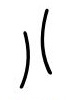
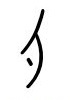
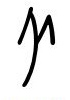
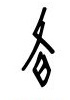
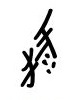
Nüshu is a syllabic script derived from Chinese characters and developed and exclusively used by women of Hunan province who were not afforded education in standard Chinese writing.

When I started researching this script, I discovered that Omniglot, my first-stop source for writing system information, didn't actually have a complete listing of characters or their pronunciations. And in fact, finding this information anywhere was extremely difficult.

Nüshu has been in Unicode since 2017, however, and by piecing together multiple Unicode standards documents (some giving the reference graphics per codepoint, others the romanized transcription), I was able to put together this table of the pronunciations of Nüshu characters. Omniglot reports that Nushu has between 6 and 7 hundred characters, but Unicode 13 encodes 396 characters, ordered by stroke count, phonetic final, phonetic initial, and tone.

Note that the sound system encoded by Nüshu is not identical to that of modern standard Mandarin, and the transcription is not pinyin. This document describes the phonetic transcription, but it is not quite IPA. If any sinologists who can tell me the IPA equivalents end up reading this, I would love to update the table with that information! The pronunciation data used in Unicode sources was in turn derived from the book Nüshu Duben.


i5

na33

tsha5

ie21

poe5

swe33

phiu44

u5

cya35

tie42

njie33

toe33

tchye5

fwe13

liu44

siu35

thu35

njyu13

vai42

kai44

khau21

kou21

tciou35

liang35

ciang13

tsheng44

song44

ma5

fa44

la44

thoe21

tsoe42

fwe44

tswe35

ti13

ci21

fu44

fu35

fu13

tcyu35

tcyu21

fai44

hau35

lou35

liou33

tciou44

ciou35

tchyn21

fang44

vang42

sang33

khang21

theng44

neng44

piong13

iong42

va33

khua44

tchya33

nie33

lie21

tcie44

tchie44

njie44

njie42

ie44

ie33

mwe13

vwe33

vwe5

twe33

tswe44

swe42

swe13

tci35

ci35

i5

liu44

njiu33

ciu35

mu13

yu44

tchy21

njy33

y42

pai35

pai35

lai42

ai42

hau35

tou42

liou42

iou13

tsew35

tsew21

suow44

huow42

huow35

nguw33

mang42

thang44

kang44

liang33

tciang35

njiang42

peng44

seng44

piong42

tshiong21

tcing21

pa5

la33

sie35

tcie35

ie21

poe21

loe42

tsoe13

soe5

koe44

khuoe21

ye21

pwe33

pwe5

tchi21

tsiu33

fu42

vu42

khu35

hu5

pw13

fw42

sw5

kw5

hw44

mai42

thai44

sai44

sai44

thau35

lau21

lau21

nou33

kou33

ciou44

sew35

lew44

thuow21

uow33

kuw5

tcyn42

yn35

vang33

tsang44

sang44

khang35

tciang44

iang13

teng42

neng33

piong33

miong33

ciong42

ciong21

njing42

ng13

tsa35

sa21

kua44

kua35

cya5

cie44

phoe35

foe42

loe35

tshoe44

tshoe21

oe44

tchye35

fwe44

tswe33

ni33

tshi5

tshi5

si44

fu33

ngu13

tchyu21

cyu44

phw21

fai42

tsai13

lou42

tsou5

piou44

miou13

tchiou21

njiou33

iou13

nuow42

kuow44

huow21

pang44

ang21

tsiang44

tsiang42

ciang42

iang42

liong42

tshiong35

ciong44

cing35

la13

cya42

poe42

thoe44

noe33

tshoe44

kue44

kue35

kue21

ye42

pwe35

vwe35

thi5

tsi42

tsi42

tci21

tci21

tshiu21

pu33

tsu42

ku21

tcyu44

njyu33

tchy35

pw5

hw35

phai35

mai33

lai35

sai21

hai42

mau33

tshau35

hau33

kou5

ou44

tsiou33

tshiou44

siou44

tciou5

ciou13

thuow44

fang13

vang5

lang44

tshang44

khang44

khang5

liang42

siang44

ciang44

ciang35

neng35

leng42

nong42

long35

liong13

tsiong13

siong44

tcing44

tcing44

cing42

ing21

ng44

va42

sa35

lie42

tshie21

sie5

ie13

moe13

loe21

tchye44

cye44

pi33

ti44

tci5

tsiu44

pu5

fu21

thu35

hu42

tcy13

cy5

pw42

khw5

lai44

sai44

sau35

tsou42

ngou42

tsiou33

njiou13

ciou5

iou42

yn44

tang42

lang42

kang35

hang44

hang42

siang35

tciang13

iang44

meng42

tsiong42

siong21

tchiong44

pa33

tshie5

sie5

tsoe44

koe35

tcye44

tcye42

pwe35

swe44

ti42

i42

tciu42

ciu44

tsu35

tshu35

ku44

lw5

mai42

kau44

thou21

hou33

pang42

fang44

tang13

lang33

meng33

teng42

tseng42

cing13

ing42

tsa33

tsie21

cie21

moe42

li35

tsi5

tci44

i35

mu33

lu21

hu42

cyu33

hw5

tau13

siou21

lew33

tshew5

yn13

tong13

ie35

voe5

tswe21

i21

tu33

lu35

lou33

tsou42

tsuow44

mang13

tciang33

tchiang21

tciong44

tsie33

moe33

ku44

cyu35

pw21

tsiang42

tshai44

nguow13

nong44

fu5

ku5

fang33

tcye21

fi21

Script Subsets

In order to explore the structure of the script, I broke it down into subsets of characters with common initials, common finals, and common tones. Each initial, final, and tone, with the characters that have them in their pronunciation, is listed below.

Initials

Initial: ∅

Initial: n

Initial: tsh

Initial: p

Initial: s

Initial: ph

Initial: c

Initial: t

Initial: nj

Initial: tch

Initial: f

Initial: l

Initial: th

Initial: v

Initial: k

Initial: kh

Initial: tc

Initial: m

Initial: ts

Initial: h

Initial: ng

Finals

Final: i

Final: a

Final: ie

Final: oe

Final: we

Final: iu

Final: u

Final: ya

Final: ye

Final: yu

Final: ai

Final: au

Final: ou

Final: iou

Final: iang

Final: eng

Final: ong

Final: yn

Final: ang

Final: iong

Final: ua

Final: y

Final: ew

Final: uow

Final: uw

Final: ing

Final: uoe

Final: w

Final: ng

Final: ue

Tones

Tone: 5

Tone: 33

Tone: 21

Tone: 44

Tone: 35

Tone: 42

Tone: 13